
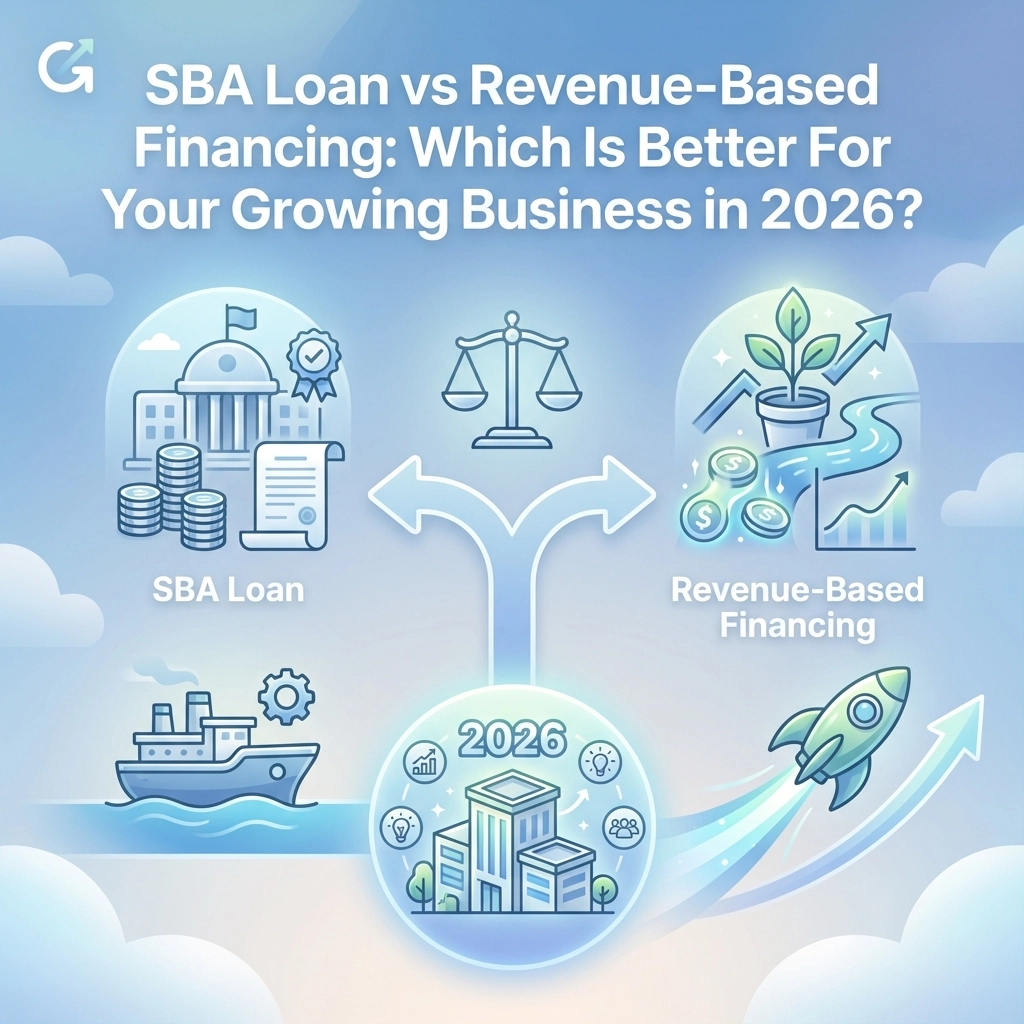
You're staring at two completely different funding paths, and frankly, both seem confusing. SBA loans promise low rates but demand perfect paperwork. Revenue-based financing offers speed but costs more. Which one actually makes sense for your business right now?
Here's the straight truth: neither option is universally better. The right choice depends on your cash flow patterns, credit situation, and how quickly you need the money. But by the end of this comparison, you'll know exactly which path fits your business.
What You're Actually Choosing Between
SBA loans are government-backed traditional loans with fixed monthly payments, regardless of whether you have a great month or a terrible one. You borrow $100,000, you pay back $100,000 plus interest over a set timeline.
Revenue-based financing (RBF) ties your payments to your monthly sales. When business is slow, you pay less. When you're crushing it, you pay more. You're not borrowing money, you're selling a percentage of future revenue.
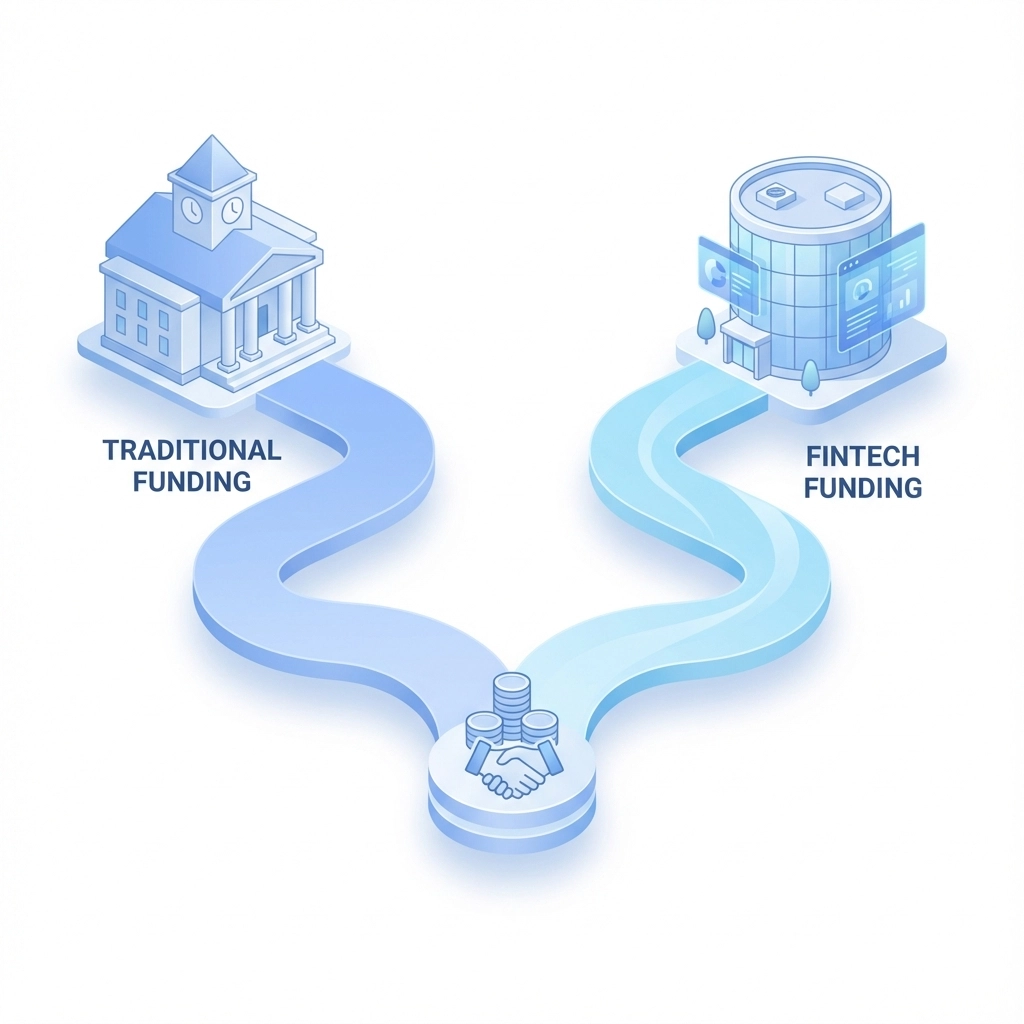
The Real Cost Difference (And Why It's Not What You Think)
Everyone talks about SBA loans being "cheaper," but let's get specific. SBA 7(a) loans typically run 6-9% APR depending on your credit and the prime rate. That $100,000 loan costs you roughly $6,000-$9,000 per year in interest.
Revenue-based financing works differently. You might pay back 1.2x to 2x what you borrow. Borrow $100,000, pay back $120,000-$200,000 total. Sounds expensive, right?
But here's what most comparisons miss: RBF has no hidden fees, no closing costs, and no personal guarantees in most cases. SBA loans? You're looking at origination fees (2-3.5%), appraisal costs, legal fees, and guarantee fees that can add $3,000-$7,000 to your total cost.
More importantly, RBF payments adjust to your revenue. During COVID, businesses with RBF paid almost nothing for months. Businesses with fixed SBA payments? Many went under trying to make those monthly payments.
Speed and Approval: The Reality Check
SBA loans take 30-90 days minimum. You'll submit financial statements, tax returns, business plans, personal financial statements, and probably documents you didn't know existed. Your loan officer will want to understand your business model, review your projections, and possibly require collateral.
RBF can close in 24-72 hours. You connect your bank account and accounting software. The lender analyzes 6-12 months of revenue data. If you're doing $30,000+ monthly and have decent bank deposits, you're likely approved.
The trade-off? RBF lenders typically want to see 6+ months of consistent revenue. Brand new businesses often can't qualify. SBA loans, especially microloans, sometimes work for newer businesses with strong personal credit.

Credit Requirements: What Actually Matters
For SBA loans, you need a 650+ credit score for most programs, though some lenders want 700+. You'll also need clean personal finances, reasonable debt-to-income ratios, and preferably some industry experience.
RBF cares more about your business performance than your credit score. Many providers approve businesses with 550+ credit scores if the revenue is strong and consistent. They're looking at your bank deposits, not your personal credit mistakes from five years ago.
The catch: RBF providers are extremely picky about revenue consistency. A few months of declining sales can kill your application faster than bad personal credit kills an SBA application.
When SBA Loans Make Perfect Sense
Choose an SBA loan if you need significant capital for:
- Equipment purchases over $75,000
- Real estate acquisition for your business
- Business acquisitions or major expansions
- Long-term working capital with predictable cash flow
Your business should have monthly revenue over $50,000, steady growth patterns, and you can wait 2-3 months for funding. SBA loans work brilliantly for established businesses making major investments.
You'll also want strong financial records. If your bookkeeping is messy or your tax returns show losses, SBA underwriters will pass.

When Revenue-Based Financing Wins
RBF makes sense when you need:
- Quick working capital for inventory, marketing, or payroll
- Seasonal funding to bridge slow periods
- Growth capital without giving up equity or control
- Flexibility during uncertain economic times
This works especially well for e-commerce businesses, restaurants, service companies, and any business with variable monthly revenue. If you're doing $25,000+ monthly but your sales swing between $15,000 and $40,000 depending on the season, RBF adjusts with you.
RBF also works when traditional lending doesn't. Limited credit history, recent business challenges, or unconventional business models that confuse traditional underwriters.
The 2026 Landscape: What's Actually Changing
The small business funding world is splitting into two distinct paths in 2026. Traditional SBA lending is becoming more automated but also more stringent. Expect faster processing (maybe 30-45 days instead of 90) but tighter underwriting standards.
Revenue-based financing is exploding. New providers enter monthly, and existing ones are expanding into smaller deals. You can now get RBF for as little as $10,000, making it viable for micro-businesses that previously had no options.
Interest rates matter more now. With the economic uncertainty of 2026, variable cash flow protection becomes more valuable. Fixed SBA payments feel riskier when you're not sure what next month looks like.
The integration between business banking and RBF is getting seamless. Many providers now offer real-time approval based on your connected bank accounts and payment processing data.

Making Your Decision: The 3-Question Framework
Question 1: Do you need more than $150,000?
If yes, lean toward SBA loans. Most RBF tops out around $100,000-$150,000, while SBA loans can reach $5 million.
Question 2: How predictable is your monthly revenue?
If your monthly sales vary by more than 30%, RBF probably fits better. If your revenue is steady within 10-15%, SBA loans offer better long-term value.
Question 3: How quickly do you need the money?
Need funding within a week? RBF is your only realistic option. Can you wait 1-2 months? SBA loans save money long-term.
Beyond the Basics: Alternative Considerations
Don't ignore business lines of credit as a middle ground. They offer SBA-level costs with more flexibility than term loans. For smaller amounts ($25,000-$75,000), a business line of credit might beat both options.
Invoice factoring works if you have B2B customers with good credit. You can get immediate cash flow improvement without taking on debt.
For equipment specifically, equipment financing often beats both SBA loans and RBF with competitive rates and the equipment itself as collateral.

Your Next Steps
If you're leaning toward SBA loans: Start gathering financials now. You'll need 3 years of tax returns, year-to-date profit & loss statements, balance sheets, and cash flow projections. Consider working with an SBA preferred lender for faster processing.
If RBF makes more sense: Clean up your bookkeeping and connect your accounting software to your bank accounts. Most RBF providers want to see clean, consistent deposits that match your reported revenue.
Not sure yet? Apply for both. RBF applications take 15 minutes and won't affect your credit. Start your SBA application while waiting for RBF approval. Having options gives you negotiating power.
The funding landscape in 2026 favors prepared businesses. Whether you choose SBA loans or revenue-based financing, success comes from understanding exactly what lenders want and positioning your business accordingly.
Your business deserves funding that matches its reality. Fixed payments work great for predictable businesses. Flexible payments work better for growth-focused companies navigating uncertainty. Choose based on your actual situation, not what sounds better on paper.
Ready to explore your options? Check out our funding options guide to see which programs match your specific business needs.
Leave a Reply