
You need new equipment. Maybe it's a truck, a piece of machinery, computers for your team, or that specialized tool that'll help you take on bigger jobs. But here's the problem: you don't want to drain your business bank account to get it.
Good news: you don't have to choose between getting the equipment you need and keeping your cash flow healthy. Equipment financing combined with the Section 179 tax deduction is basically a cheat code for upgrading your business without torpedoing your working capital. And in 2026, the limits are massive.
Here's what you need to know to make this work for your business.
What is Section 179 (And Why Should You Care)?
Section 179 lets you immediately deduct up to $2,560,000 in equipment costs in 2026: not over five years, not gradually, but right now on this year's taxes. That's the total purchase price, whether you pay cash or finance it.
Think of it like this: If you buy a $100,000 piece of equipment and you're in the 35% tax bracket, you could save around $35,000 on your taxes this year. That's real money back in your business, not some vague future benefit.
The deduction reduces your taxable income dollar-for-dollar. So if you made $500,000 this year and bought $100,000 in qualifying equipment, you'd only pay taxes on $400,000. It's one of the most straightforward tax breaks available to small business owners, and it works whether you pay cash or finance the purchase.
The 2026 Numbers You Need to Know
Here's where it gets interesting. The Section 179 deduction limit for 2026 is $2,560,000. That's the maximum you can write off in a single year across all your qualifying equipment purchases.
But there's a phase-out threshold. Once your total equipment purchases for the year exceed $4,090,000, the deduction starts decreasing dollar-for-dollar. If you hit $6,650,000 in total purchases, the Section 179 benefit goes to zero. This is designed to help small and mid-sized businesses, not massive corporations buying entire fleets.
For most business owners, that $2.5 million+ limit is more than enough runway to get everything you need: trucks, machinery, computers, software, tools, furniture, you name it.
And here's the kicker: 100% bonus depreciation is still available in 2026 as a backup plan. If you somehow exceed the Section 179 limits or choose not to use it, bonus depreciation can still give you a substantial write-off.
How Equipment Financing Actually Works with Section 179
Here's the part that confuses people: You can finance the equipment and still claim the full Section 179 deduction on the entire purchase price.
Let's say you finance a $200,000 piece of equipment with $20,000 down and payments over 60 months. You still get to deduct the full $200,000 on your 2026 taxes (assuming it qualifies and you put it into service by December 31). You're not limited to deducting just your down payment or the amount you've paid off so far.
This is huge because it means you can:
- Keep cash in your business for payroll, inventory, or emergencies
- Get the tax benefit immediately
- Spread the actual cost over time with manageable payments
Equipment financing terms typically range from 24 to 84 months depending on what you're buying and your credit profile. Most lenders approve applications within one business day: some even faster. At Loan Pros, we specialize in 24-48 hour decisions so you're not waiting weeks to find out if you're approved.
You can finance the entire equipment cost or just part of it. Either way, Section 179 applies to the total eligible purchase amount, not just what you borrowed.

The December 31 Deadline (Don't Sleep on This)
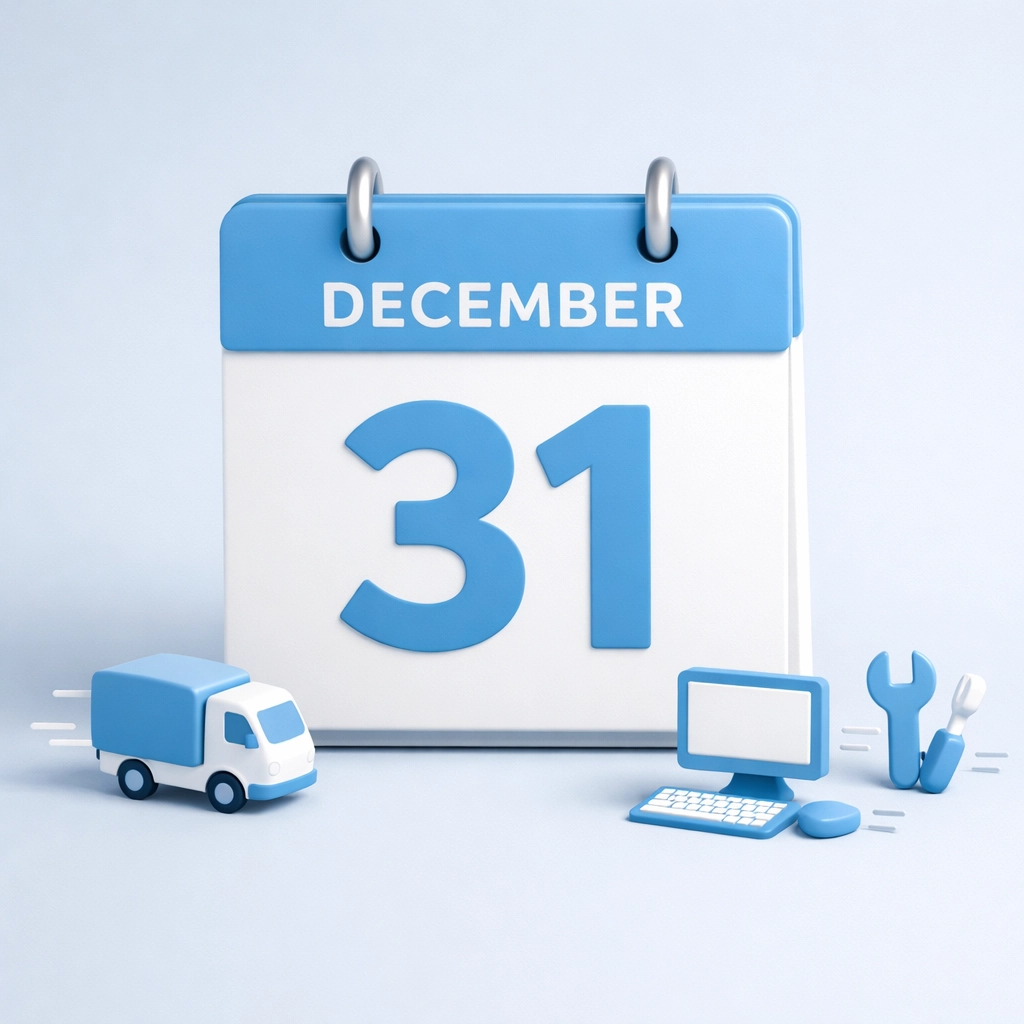
Here's the non-negotiable rule: All qualifying equipment must be purchased AND placed into service by December 31, 2026.
"Placed into service" doesn't mean ordered or shipped. It means the equipment is delivered, installed, operational, and actively being used in your business. If it's sitting in a warehouse or waiting for installation on January 2, you missed the window.
Supply chain issues are still a thing in 2026. Shipping delays, installation backlogs, custom orders: all of this can push your timeline. If you're eyeing a major equipment purchase for the tax benefit, don't wait until November to start the process.
The sweet spot? Apply in Q4 (October through December). This gives you time to assess your annual income, figure out exactly how much deduction you need, and still get everything delivered and operational by year-end.
What Actually Qualifies for Section 179?
Most business equipment qualifies. Here's what typically makes the cut:
- Vehicles: Trucks, vans, work vehicles (with some weight restrictions)
- Machinery and equipment: Manufacturing tools, construction equipment, medical devices
- Office equipment: Computers, servers, printers, furniture
- Software: Off-the-shelf business software (not custom-developed)
- Property improvements: HVAC, roofing, security systems for non-residential buildings
The equipment must be used more than 50% for business purposes. If you're buying a truck that's also your personal vehicle, you can only deduct the business-use percentage.
New and used equipment both qualify. There's no IRS minimum purchase amount: any qualifying equipment counts. That said, individual lenders might have their own minimums (often around $10,000) for financing.
How to Actually Make This Happen
Here's your action plan:
1. Figure out what you need before year-end
Make a list of equipment purchases that would genuinely move your business forward. Don't buy stuff just for the tax break: but if you were planning to upgrade anyway, now's the time.
2. Run the numbers
Use a Section 179 calculator (plenty of free ones online) to estimate your tax savings based on your equipment cost and tax bracket. This helps you see the real financial impact.
3. Apply early for financing
Don't wait until December. At Loan Pros, our dedicated advisors can walk you through your options and get you approved fast: usually within 24-48 hours. Early applications mean you have plenty of time to get equipment delivered and installed.
4. Keep your documentation
Save delivery receipts, installation records, and proof the equipment is operational (photos, logs, timestamps). The IRS may ask for this during an audit, and you want to be ready.
5. Talk to your accountant
Seriously. Section 179 is powerful, but your tax professional can help you coordinate it with bonus depreciation, determine the optimal deduction amount based on your income, and make sure everything's filed correctly.
Why Equipment Financing Makes Sense Right Now
Here's the reality: Cash is king in business. Draining your bank account for a single equipment purchase: even one that qualifies for a big tax deduction: can leave you vulnerable.
Equipment financing through small business funding options lets you keep cash on hand for:
- Payroll during slow months
- Inventory purchases
- Unexpected repairs or emergencies
- Growth opportunities that pop up
You're essentially trading a small monthly payment for financial flexibility. And because Section 179 lets you deduct the full purchase price immediately, you get the tax benefit upfront while spreading the actual cost over time.
At Loan Pros, we've helped thousands of business owners navigate equipment financing and business loans. Our process is straightforward, our decisions are fast, and our advisors actually understand what you're dealing with because we work with businesses like yours every day.
The Bottom Line
Equipment financing in 2026 isn't just about getting the tools you need: it's about doing it strategically. Section 179 gives you up to $2,560,000 in immediate tax deductions, financing preserves your cash flow, and the combination means you can grow your business without betting the farm.
But timing matters. The December 31 deadline is firm, and supply chains don't care about your tax strategy. If you're serious about upgrading your equipment this year, start the process now.
Want to see what you qualify for? Check out our funding options or reach out to one of our advisors. We'll help you figure out the best path forward: usually within 24-48 hours.
This blog post is for educational purposes and should not be considered tax advice. Consult with a qualified tax professional to determine how Section 179 applies to your specific business situation.
Leave a Reply